The insurance industry holds vast volumes of data, yet meaningful insight often remains out of reach. Years of dependence on legacy systems have created complex, disconnected technology estates where each platform stores information in isolation. This environment of fragmented data requires significant manual effort to reconcile, frequently leading to delays, inconsistencies, and reduced confidence in the outputs. Rather than supporting timely and well-informed decisions, critical information is constrained by systems that were not designed for modern analytical demands. InsurePulse was developed to address this structural challenge and provide insurers with a unified, dependable foundation for data-driven operations.
The Silent Crisis of Fragmented Data in Insurance
The insurance sector has long depended on a collection of complex, interdependent systems built and expanded over many decades. Core policy administration often resides in one platform, claims management in another, and finance or actuarial models in entirely separate systems. Broker portals, reinsurance platforms, regulatory reporting tools, and third-party data feeds add further complexity. The result is a web of disconnected systems that rarely communicate effectively.
This fragmentation creates what many experts call the “silent crisis” of insurance operations. The data exists, but it is locked within silos that limit access, slow reporting, and obscure insight. Decision-makers are left without a unified view of performance, risk exposure, or profitability, undermining their ability to respond quickly to market dynamics.
Key Pain Points in Legacy Data Environments
Duplicate Data Entry and Inconsistencies
A common symptom of fragmentation is data duplication. The same policyholder may appear under multiple variations across systems: “Jon Smith,” “John A Smith,” or “J Smith.” Each variation can represent the same individual but is treated as a separate record. Reconciling these discrepancies is typically a manual, time-consuming process that introduces errors and consumes valuable resources. Inconsistent data reduces trust and complicates analytics, as teams must spend hours verifying whether the figures they are using are accurate and complete.
Slow, Manual Reporting
In many insurance organisations, producing a single report requires extracting information from multiple systems, exporting data into Excel, aligning date formats, and reconciling numbers manually. The process can take hours or even days, with one delayed feed capable of derailing an entire cycle. Monthly board packs, regulatory submissions, and performance dashboards all suffer from inefficiency and potential inaccuracy.
Regulatory Reporting Challenges
Modern insurance regulations, including IFRS 17, require detailed audit trails and data lineage. Compliance teams must be able to trace figures back to their source quickly and accurately. Without a unified data framework, this becomes a daunting task that can take weeks of manual tracing. Incomplete or inaccurate lineage not only increases compliance risk but also leads to costly delays.
Missed Risk and Performance Signals
When data sits in disconnected systems, valuable insights often go unnoticed. For example, a rise in policy cancellations might seem routine when viewed in isolation within the policy system. However, when cross-referenced with data from the claims platform, it could reveal that customers are leaving after experiencing delayed settlements. Without a unified view, these linked patterns remain hidden, preventing the business from addressing the root cause early and improving customer retention.
IT Bottlenecks and Delayed Insights
Legacy systems typically require significant IT intervention for even basic data queries or dashboard creation. Every new request for a report analysis results in custom ETL jobs or code adjustments. Business users often wait hours or days for insights they need immediately. This reliance on technical teams restricts agility and slows decision-making.
High Costs of Maintenance
Maintaining outdated systems is expensive. Many insurers still depend on platforms requiring specialised, often scarce skills. Licensing, patching, and integration efforts consume large portions of IT budgets. Meanwhile, the risks associated with complete system replacements discourage transformation. The result is an ongoing cycle of high costs and low efficiency.
A Unified Solution: How InsurePulse Transforms Data Operations
InsurePulse was conceived to directly address the long-standing data challenges faced by insurers. It provides a unified, AI-enabled data platform designed to integrate seamlessly with existing technology stacks.
The core principle of InsurePulse is simple yet transformative: it aggregates data from multiple legacy systems into a single source of truth, delivering real-time, 360-degree visibility across the enterprise.
Unlike traditional data integration tools, which demand extensive setup and ongoing maintenance, InsurePulse features a lightweight and flexible architecture. This design significantly accelerates deployment while minimising disruption.
Built with the industry’s unique needs in mind, InsurePulse combines a simple, modern user experience with the power of advanced data integration, analytics, and automation. This results in a comprehensive solution that unifies data, enhances operational agility, and empowers insurers to make faster, smarter decisions.
Key Components in InsurePulse
The platform is structured around modular components that facilitate seamless data handling. The main elements include:
Data Integration Layer: This handles connections to various sources, extracting structured and unstructured data via saved connection strings. When running reports, users select sources dynamically, with status indicators showing progress.
InsurePulse connects to virtually any source of data, whether structured or unstructured.
Supported sources include:
- Legacy Systems
- Core Systems
- Peripheral Apps
- Online SaaS
- IoT Devices
- Social Media
- Web Scraping Inputs
- Text, PDF, Image, Audio, and Video Files
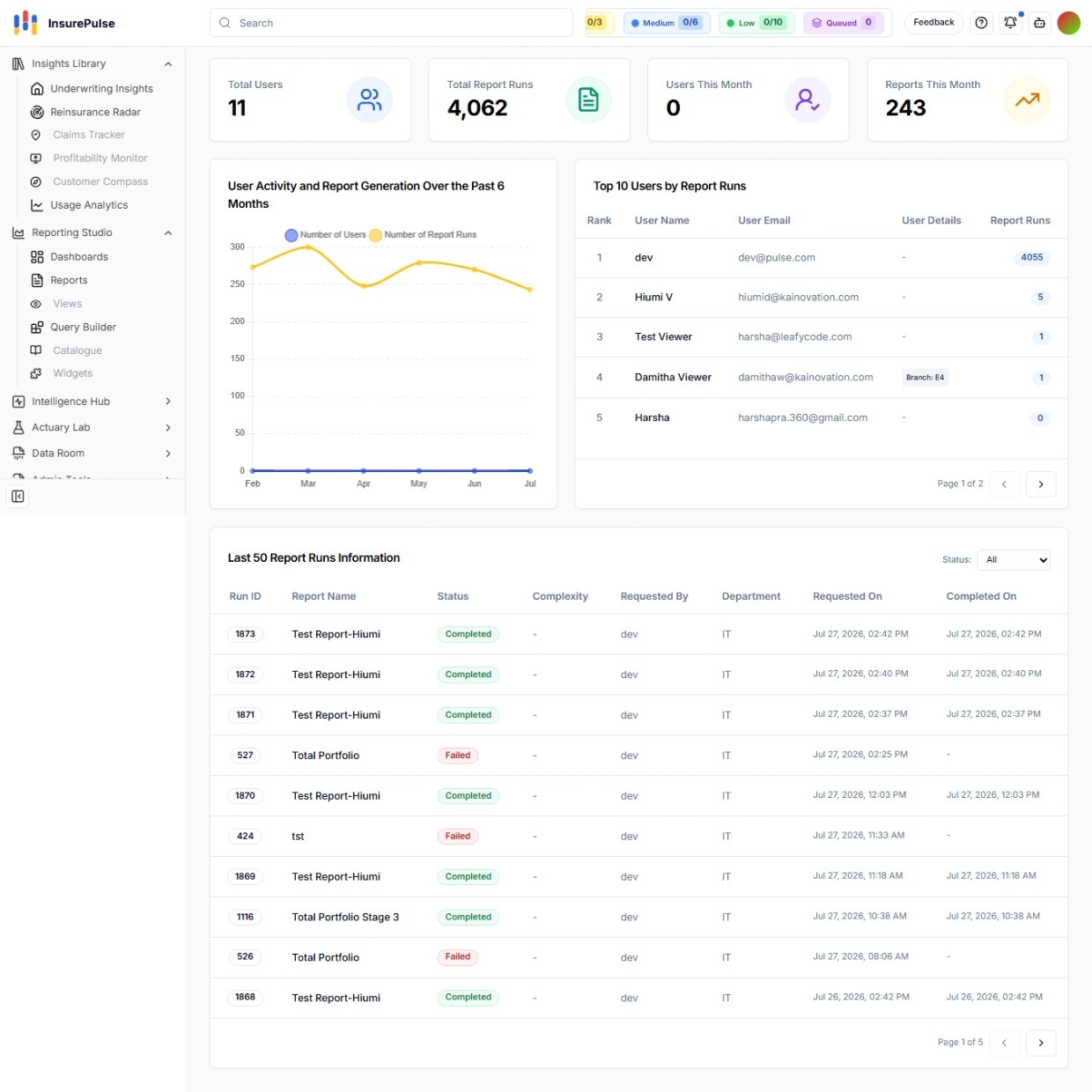
Query and Processing Engine: A drag-and-drop query builder allows users to construct, test, and save queries. It supports low-code interfaces alongside full SQL and Python scripting. Reports can run in parallel (up to ten simultaneously) without blocking, and scheduling automates routine tasks.
Each ETL pipeline comes with built-in data quality checks, ensuring that only accurate, complete data flows into your dashboards. Secondary or tertiary data can also be uploaded manually in Excel or CSV formats, ensuring that no valuable data is left out.
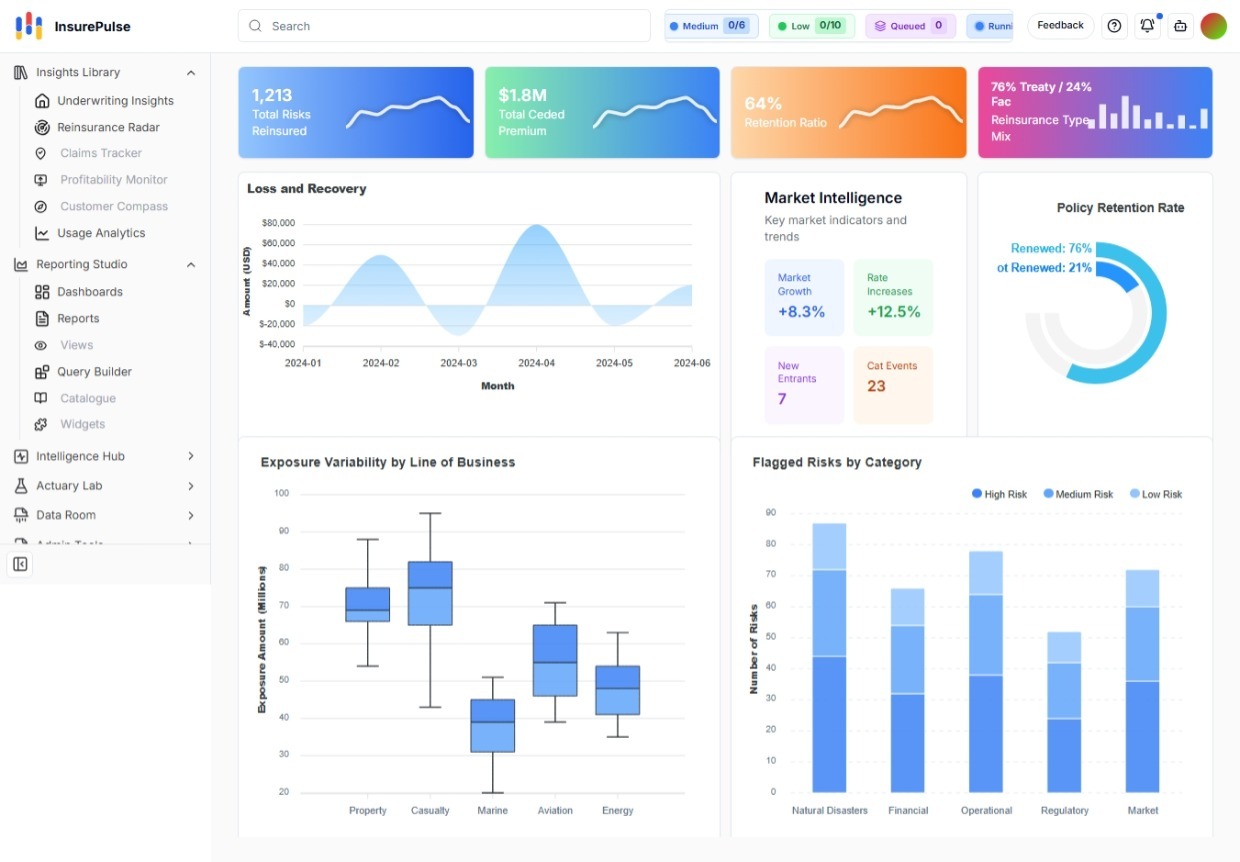
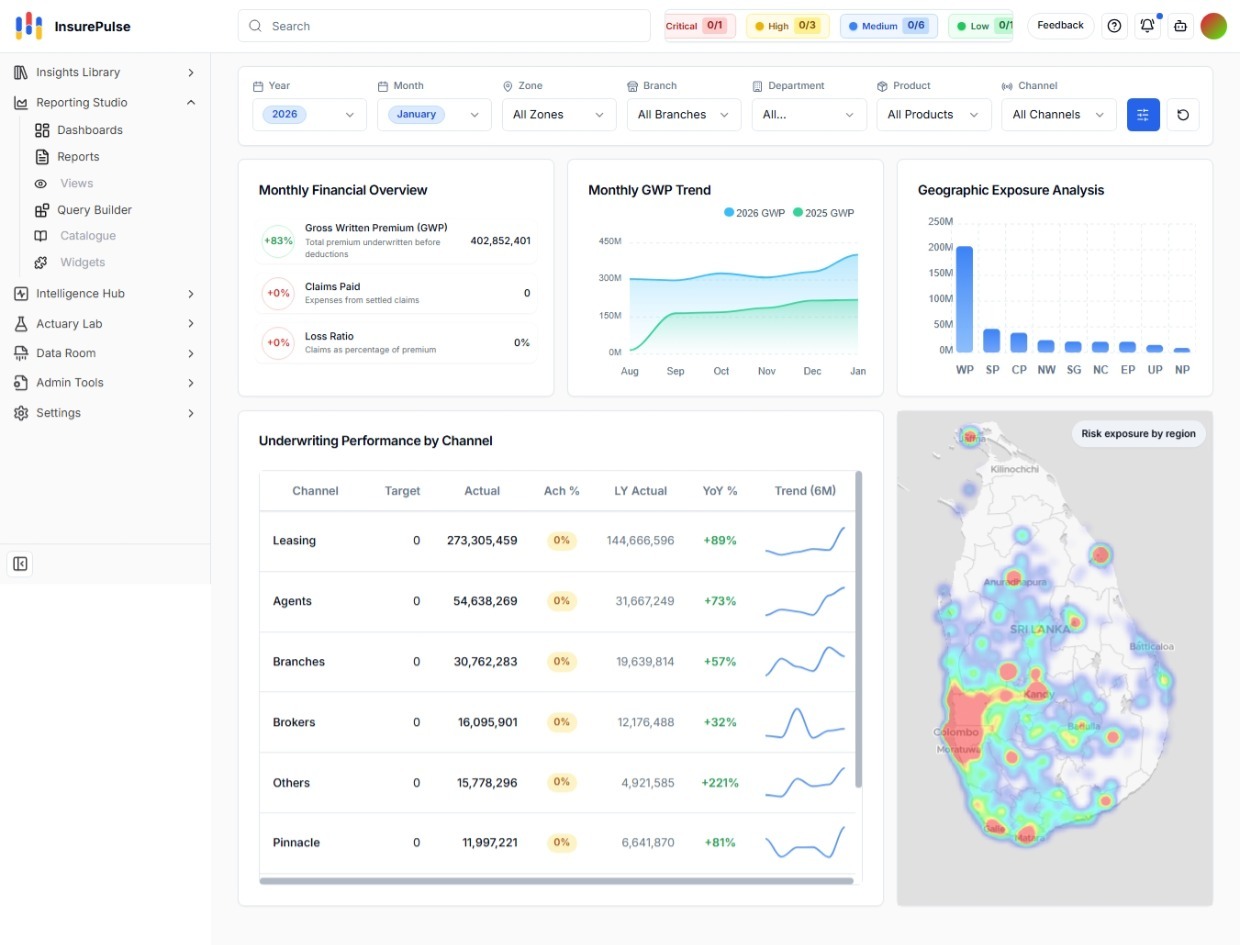
Presentation and Dashboard Module: InsurePulse provides a robust real-time analytics layer that features both standard and custom dashboards for visualisation. These graphical dashboards are personalised and tailored specifically to each logged-in user. For advanced customisation, users have the flexibility to build their own custom dashboards using integrated external Business Intelligence (BI) tools like Power BI or Tableau, which are fully accessible within the Pulse interface. Furthermore, a self-service dashboard creator with embedded BI tools empowers users to easily build their own specific visuals.
AI-Enhanced Analytics: Embedded models monitor key performance indicators (KPIs) such as monthly gross written premium trends, financial overviews, and quote volumes by day. InsurePulse also detects anomalies by differentiating normal fluctuations from genuine issues, surfacing insights that might otherwise go unnoticed.
A Closer Look at InsurePulse’s Key Features
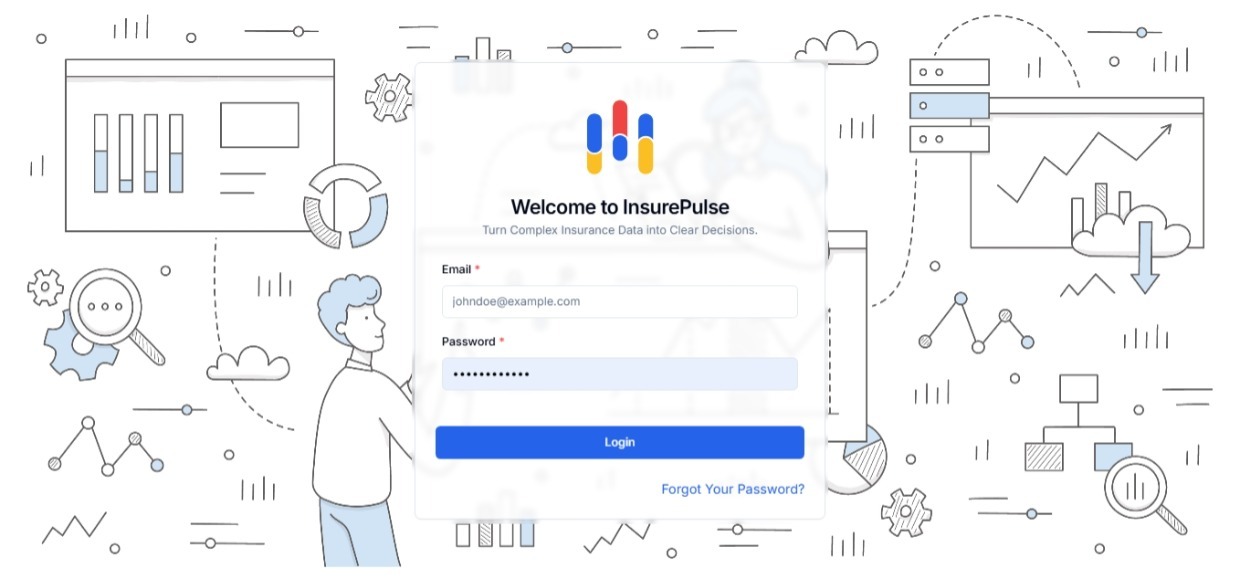
- Direct Connection to Data Sources
Users can securely connect to databases using existing credentials. InsurePulse runs queries directly against the source systems or against its presentation database. This hybrid approach allows for flexibility and performance optimisation. - Real-Time Processing and Reporting
Reports can be generated, formatted, and delivered automatically on a set schedule, removing the need for manual effort. Users can define once when and how a report should run, and InsurePulse ensures it’s prepared and sent before the start of business. This automation guarantees consistency, timeliness, and accuracy across all operational and financial reports. - Self-Service Design
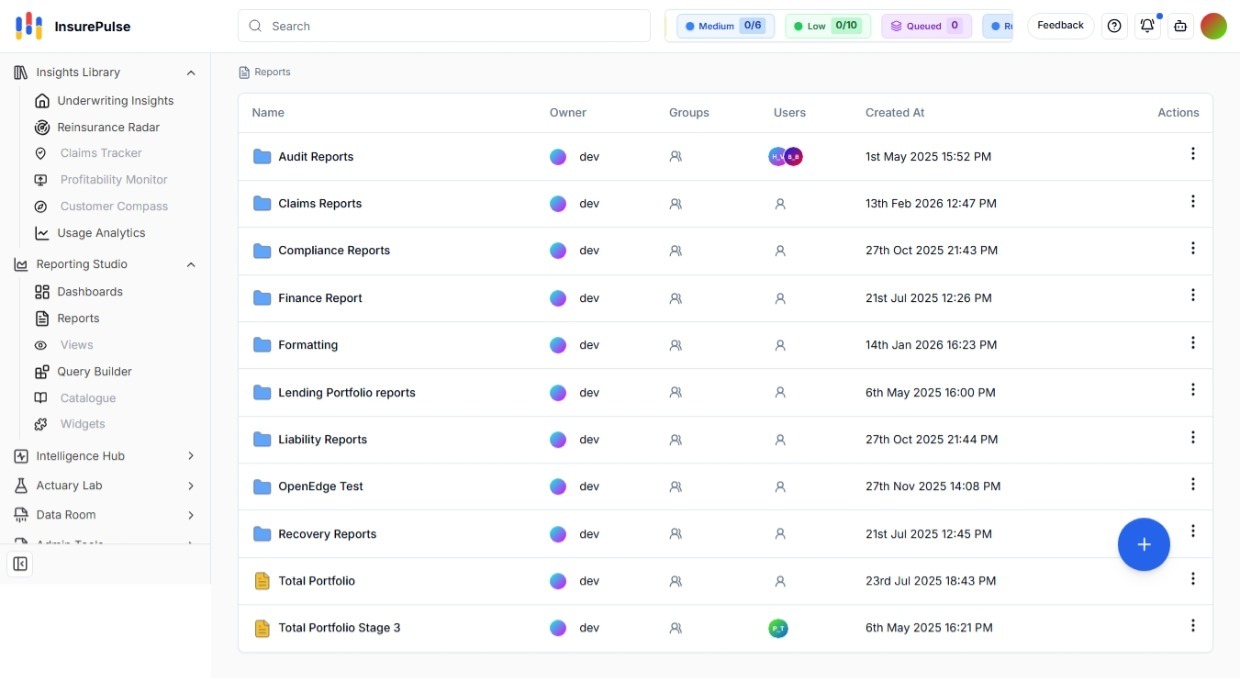
Business users can build their own reports, dashboards, and ETL pipelines without waiting for IT. The drag-and-drop query builder and visual dashboard tools make analytics accessible to everyone. - Secure, Governed, and Compliant
Every connection, report, and user activity is managed with strong governance controls. InsurePulse uses VPN tunnels for secure connections, role-based access control, and row-level security to ensure that each user only sees the data they are authorised to view. - Performance and Cost Efficiency
When tested against enterprise reporting tools, our platform consistently delivered faster report execution times. Beyond speed, InsurePulse delivers 100% accuracy as long as the query logic is sound. It simply executes and presents the user’s instructions with precision. Combined with lower infrastructure and licensing costs, InsurePulse provides a compelling return on investment.
Proven Outcomes for Insurance Clients
- More than 250 users have gained access to enterprise-grade data capabilities at a fraction of traditional tooling costs, immediately improving operational efficiency across teams.
- Reports that previously took over two hours to generate now run in under two minutes, freeing skilled staff from manual data work and returning significant productivity to the business.
- As a result, decision-makers now receive accurate, validated information at the start of the day rather than halfway through it, accelerating insight, improving governance, and enabling a more proactive response to emerging risks and performance trends.
Inside InsurePulse: A Visual Overview
The Future of Data-Driven Insurance
As insurers continue to navigate a rapidly changing regulatory and competitive landscape, the ability to act on trusted, real-time data is becoming a defining advantage. InsurePulse equips organisations with that advantage. By transforming fragmented data into unified intelligence, it enables faster decisions, deeper insights, and stronger compliance – all at a fraction of traditional costs.
With its scalable architecture, open-source foundation, and AI-enhanced analytics, InsurePulse is not just keeping pace with industry change; it is driving it. For insurers ready to modernise their operations and unlock the full potential of their data, InsurePulse represents the future of data-driven performance.